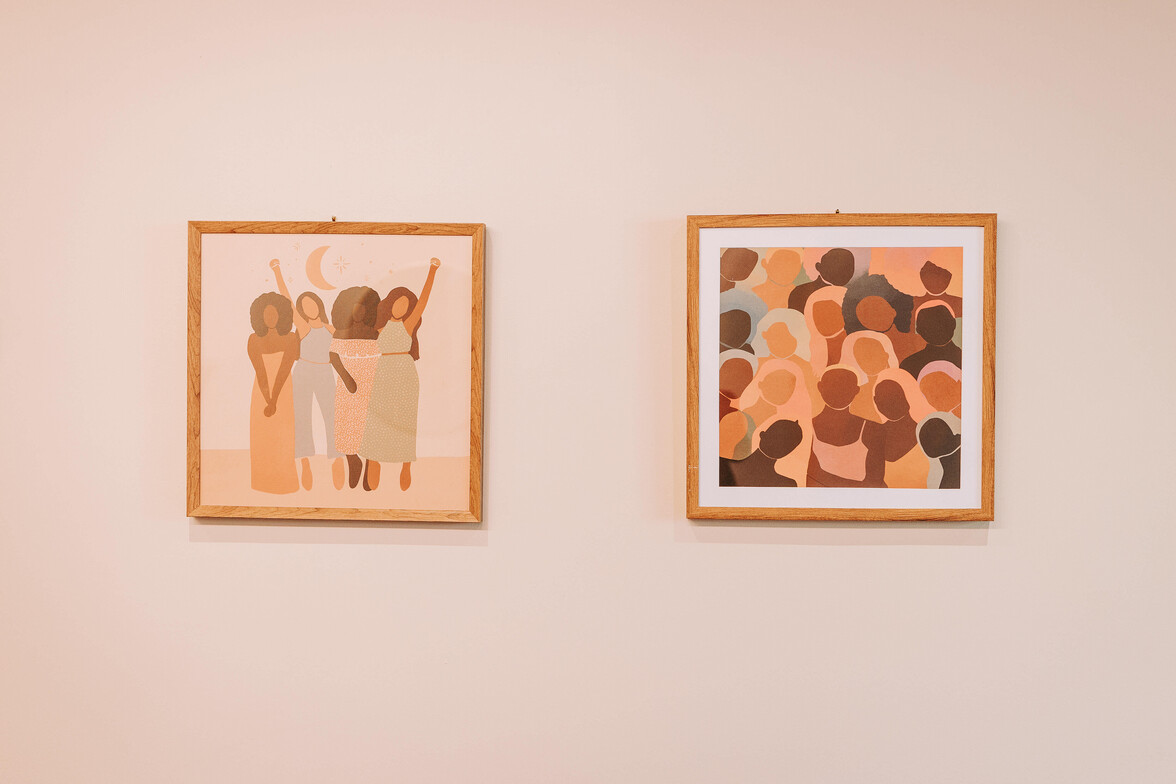
Black history is often told through stories of resilience, resistance, and survival. These narratives matter. They honor endurance in the face of unimaginable harm. But when strength is the only story we tell, something important gets left out: the emotional cost of surviving, and the quiet, often unseen ways Black people have always cared for their mental and emotional well-being.
Survival Required More Than Physical Strength
For generations, survival required constant adaptation. Emotional suppression, hypervigilance, self-monitoring, and perseverance were protective strategies. They helped people endure systems that were not built for their safety or dignity.
From a mental health perspective, these strategies were crucial. When environments are unsafe, the nervous system learns to stay alert. Vulnerability was not always an option, so emotions got tucked away.
These patterns are not be mistaken as signs of weakness. They were evidence of intelligence and resilience. But what helped people survive in one context can become heavy to carry in another.
The Hidden Emotional Labor of “Being Strong”
The idea of strength has long been associated with Black identity. Strength has meant showing up, holding it together, and continuing forward, even when exhausted, grieving, or overwhelmed.
While this strength deserves respect, it can also become a burden. When people feel pressure to always be strong, there may be little room for sadness, fear, or rest. Burnout can feel like a personal failure rather than a predictable response to chronic stress.
Mental health care invites a broader definition of strength. One that includes self-awareness, emotional honesty, and boundaries.
Mental Health Care Is Not New. It’s Just Been Renamed
Long before therapy offices existed, Black communities practiced mental health care in meaningful ways. Storytelling, spirituality, music, humor, mutual aid, and communal care were (and still are) forms of emotional regulation and healing.
These practices helped people process grief, maintain hope, and find connection. They also created spaces where emotions could be expressed and witnessed, even when the outside world was hostile.
Modern therapy does not replace these practices. At its best, it complements them, while offering language, structure, and support for experiences people have long carried.
How History Shows Up in the Present
Mental health is shaped by both personal experiences and collective history. Today, many people notice patterns such as:
-
Difficulty resting without guilt
-
Feeling responsible for holding everything together
-
Struggling to ask for help
-
Staying emotionally guarded even in safe relationships
-
Living in a near-constant state of stress or alertness
Many people see these as individual shortcomings, but I challenge us to simply view them as understandable responses to long-standing stress and uncertainty. Naming this context can be relieving as it shifts the question from “What’s wrong with me?” to “What have I learned to do to survive?”
Healing Is Part of the Ongoing Story
When viewed from a historical and sociopolitical perspective, self-care is and has always been a tool for social justice in efforts to challenge the oppressive structures that harm Black people's health and well-being. But Black history is not only about endurance; it is also about creativity, joy, softness, love, and healing.
Healing can look like:
-
Learning to rest without needing to earn it
-
Allowing emotions to exist without judgment
-
Setting boundaries that protect energy and well-being
-
Letting support be mutual rather than one-sided
-
Releasing the belief that suffering is the price of success or worth
Therapy as a Space for Humanity
For some, therapy becomes a rare place where strength is not required. Emotions don’t need to be rationalized or minimized.
Culturally responsive therapy acknowledges history without reducing people to it. It honours resilience, while also recognizing that mental health struggles are not personal failures.
We should not view seeking support as a sign of weakness or disloyalty to one’s roots, but as a way of continuing the legacy of care and resilence.
Expanding the Narrative
Mental health is part of this history because tending to emotional well-being has always been part of survival and part of liberation. Let's honour the past by choosing a future that allows for rest, care, and healing.
If this perspective resonates, therapy can be one place to explore what healing might look like for you. At your own pace, on your own terms.
References
Wyatt, J. P., & Ampadu, G. G. (2022). Reclaiming Self-care: Self-care as a Social Justice Tool for Black Wellness. Community mental health journal, 58(2), 213–221. https://doi.org/10.1007/s10597-021-00884-9

.jpg)
.jpg)
.jpg)