A couple weeks ago, I sat with Mehr, our drama therapist here at Cultivate Mental Health. She had just come back from getting a drink at Bridgehead, and we both settled down in a vacant office to have a chat. I put my phone on the table, and hit record.
Kathy: leans forward, smiling Okay, so, hey guys, hey I'm here with?
Mehr: grins Mehr!
Kathy: Thank you, our resident drama therapist here at Cultivate Mental Health. So, first question!
Mehr: Yes.
Kathy: How is your drink?
Mehr: eyes light up That was so good!
Kathy: laughs
Mehr: I got— it's so funny. I usually will get lattes mostly. Cold, hot, whatever, whatever I'm feeling, but um, which is such a good question because let me tell you something about drama therapy after this. But I usually will— I like a flavoured latte. They had caramel hazelnut and vanilla. I don't like caramel and I don't like hazelnuts. So I just got a vanilla, which is such a basic.
Kathy: But, like, it's good, though.
Mehr: laughing But it's so good, though. It's good, though. Thank you! With oat milk. Even more basic, but just—
Kathy: Gotta to keep our bowel movements safe.
Mehr: laughs Absolutely. That is what we're in for.
Defining Drama Therapy
Kathy: Okay, perfect. Drama therapy. If you can describe drama therapy in three words, what words would you use?
Mehr: pauses, thinking Okay. Um. Expressive. Actually, no, scratch that. Three words. No words required.
Kathy: laughs in disbelief Oh, my goodness.
Mehr: Those are my three words. I have had an actual session where my client and I have said no words the entire session except for “Hi, how are you doing? Where do you want to sit in this big room?” And then they just pointed to a place. “Our time is up”
Kathy: I love that… No words required. And, like, that's, like, the whole part of it, right?
Mehr: Absolutely.
“If You Could Be a Beverage…”
Kathy: Okay. So if you were to meet someone who has never heard a drama therapy before, what would be the type of definition or description you would give to that person?
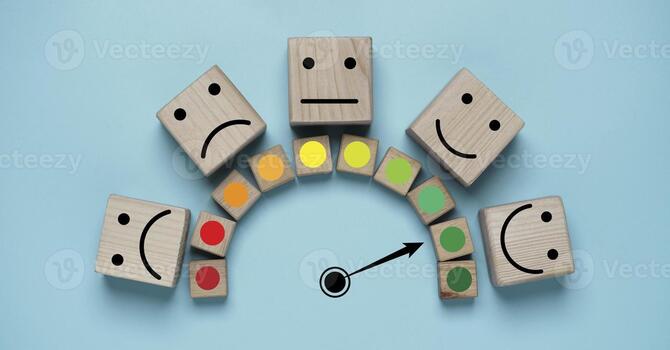
Mehr: Okay. Um, so a definition, like a basic definition for drama therapy would be we use tools like imagination, roleplaying, storytelling, for people to be able to express how they’re feeling without being a lot in their heads, I guess.. Yeah, the perfect example that I usually give people when I’m explaining drama therapy to them is— So instead of me asking, hey, how are you doing today? I'd be like… leans in playfully "If you could be a beverage right now, what beverage would you be?" Go.
Kathy: thinks for a second Right now… I think I would just like to be water.
Mehr: Water is amazing. Okay. Would you be room temperature water? Would you be cold?
Kathy: I need to be like, ice cold.
Mehr: Ice cold. Okay. And would you be in a glass or in a bottle?
Kathy: In a tub. I need to be in a tub.
Mehr: nodding Mm hmm. And are you as Kathy able to… put your hand in there, swish the water around a little bit?
Kathy: Yeah!
Mehr: Okay. I love that.
Kathy: pauses, surprised That made me feel something.
Mehr: laughs Does that makes you feel something? I am so sorry! This works, I'm telling you!
Kathy: Like… I would imagine myself… it's peace, serene, calm.
Mehr: There you go.
Who Is Drama Therapy For?
Kathy: What kind of people do you think benefits the most from drama versus more conventional talk therapy?
Mehr: Every time I'm asked this question, I'm like, everybody. Everybody can benefit from drama therapy, because especially, like, I work with kids, but I also have worked with adults. And I feel like as adults, we have forgotten how to play. You know? The fact that it took you a while to figure out why I was asking you this question of what beverage you were, just tells me that, you know, we've forgotten how to be tactile with things around ourselves and surroundings, you know? We haven't felt water swish around in a tub in a while. And I have friends that are drama therapists that work with people in palliative care. I have friends that work with people with addictions. I work with kids. I have worked with adults with intellectual disabilities. And so I don't think there's one particular population.
Kathy: Yeah. Like, I personally didn't even think that this therapy could be with adults. I just assumed that like, well, these are gonna be for kids, right? But it's so true how it we get so in our heads and we forget that there are other avenues to express ourselves that might be a lot more liberating then having to decide, what am I going to say for them to understand me?
Structure, Progress, and Misconceptions
Kathy: curious How is drama therapy structured in a therapeutic way?
Mehr: Progress is not linear, right? … today you could be doing perfectly fine, and tomorrow you’re back in heartbreak. That’s just being human.
She speaks steadily, grounding the conversation.
Mehr: We still set short-term and long-term goals… like any therapy modality… but we’re also setting the expectation that change won’t happen in one session.
Distance: Getting Close, Stepping Back
Mehr: So there’s two things… underdistance and overdistance.
She uses her hands to illustrate the spectrum.
Mehr: If something is too fresh… too painful… you need distance. So instead of “me,” it becomes a character. “If Mehr was a character… maybe Pam from The Office… what would Pam be doing?” Now I can talk about it… because it’s not directly me.
Mehr: On the other end… underdistance. She points to an imaginary chair in front of her. The person who hurt you is sitting there… they can’t talk back… and you say whatever you want.
Kathy: softly It’s liberating, I feel like.
Mehr: Yeah… liberating is the perfect word.
Kathy: I think… what I'm seeing is that you know what to give power to and what to hold power from in drama therapy.
Mehr: Absolutely.
Kathy: leaning in You really have that agency of like, what do I want to do today? How close? How far do I want to be?
Mehr: Exactly! I'm not going to tell you.
Kathy: But just having that space to explore what that means for you in a very like non-judgmental space I think that's like that's really important and that can be kind of missed in in conventional talk therapy where there's a power-
Mehr: There’s a power dynamic, and I think as a drama therapist, what I strive to do is to lessen that as much as I can. I'm not gonna tell you "This is what you can do versus this is also an option for you”. I'm not gonna do that. I'm gonna be like, “Okay, what options do you think we have here"? You know yourself more than anyone else will ever know you. And that is the entire concept of why we're here. Because it can be really hard to like constantly intellectualizing everything that you're feeling. Especially with the amount of diagnoses we've been getting, so often, we're so caught up in what the definition of the particular diagnosis is. We forget that it's also just us being human.
Being Seen
Mehr: I’ve had clients say, “I don’t want to move.” And I say, “Okay… can you move your finger a little bit?”
She demonstrates, subtly moving her index finger.
Mehr: And I mirror it back. Even though it doesn’t seem like much… it’s always more than it seems. You just have a witness. That's literally all it is.
Kathy: smiles, almost emotional Like I'm seeing you, you're seeing me…
Mehr: I see you seeing me, therefore I am.
A Final Reflection
Mehr: I remember the first day I walked into my drama therapy class, I was so nervous. And I was like, “what an imposter”. I was like, "I do not deserve to be here". The first thing my professor said… “Let nothing human be alien to me.” And I still have my notebook, on the very first page, that's the quote. I'm actually getting a tattoo of that quote. Just because it's so important.
She pauses.
Mehr: To not see someone as an other… that’s what I strive to do.


.jpg)
.jpg)